
How to Give Someone Space Without Losing Them: 15 Smart Steps That Work
Relationships go through phases where one person may need emotional or physical space. This can happen due to stress, personal struggles, confusion, or simply the need to reset emotions. In these moments, many people panic and ask themselves How to give someone space without losing them.
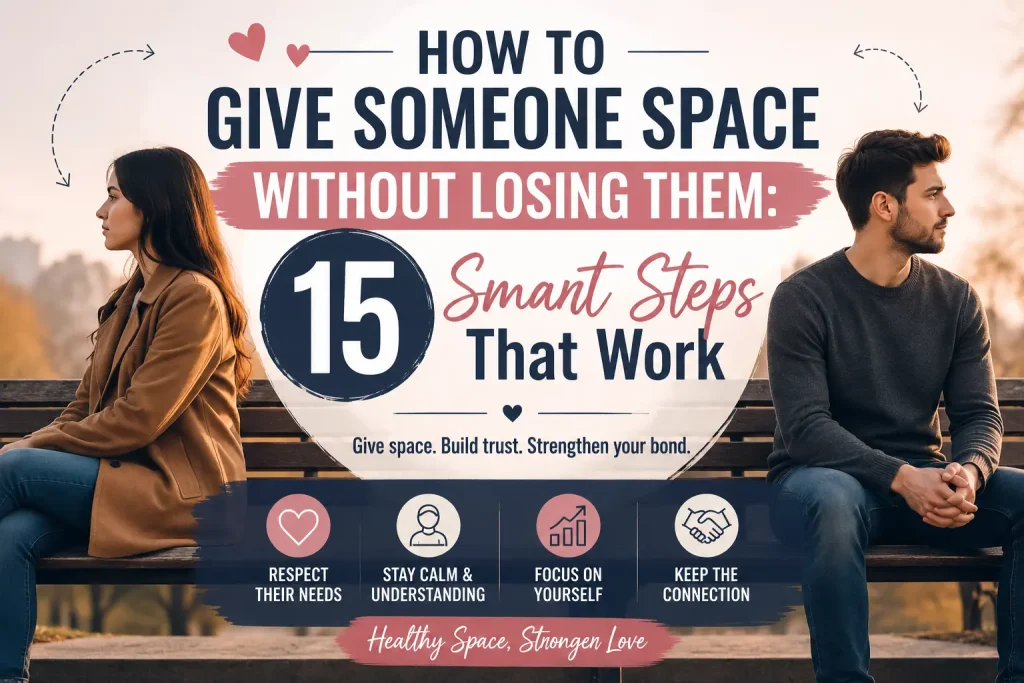
The truth is, giving space does not automatically mean losing someone. In fact, when done correctly, it can strengthen trust, improve emotional balance, and make the relationship healthier in the long run.
The key lies in how you handle that distance—whether you react with pressure and fear or with patience and emotional maturity.
Below is a step-by-step guide to help you manage this situation wisely.
Step 1: Understand What “Space” Really Means
Before reacting, understand what your partner or friend means by needing space. It is not always rejection or loss of interest.
Space can mean:
- Emotional overload
- Need for personal time
- Stress from life or work
- Desire to think clearly
When you understand the reason, you avoid jumping to worst-case conclusions.
Step 2: Avoid Panicking or Overreacting
One of the biggest mistakes people make is reacting emotionally—sending multiple messages, demanding explanations, or assuming the relationship is ending.
This behavior creates pressure and can push the other person further away.
Instead, stay calm. Your emotional stability during this phase matters more than you think.
Step 3: Respect Their Request Without Resistance
If someone clearly asks for space, respect it. Trying to convince them otherwise often has the opposite effect.
Respecting their need shows maturity and emotional understanding, which actually builds trust rather than breaking it.
Step 4: Reduce Communication Gradually
Instead of cutting off or over-contacting, find a healthy balance. Don’t disappear suddenly, but also don’t keep checking in constantly.
Let communication slow down naturally so the transition feels comfortable for both sides.
Step 5: Focus on Your Own Life
One of the healthiest responses to space is self-focus. Instead of obsessing over the situation, shift your attention to your own growth.
Work on:
- Career or studies
- Fitness and health
- Hobbies
- Social life
This not only helps you emotionally but also makes you more attractive and confident in the long run.
Step 6: Stop Overthinking Their Actions
When someone pulls away slightly, it’s easy to start analyzing everything they do or don’t do.
Overthinking leads to anxiety, and anxiety leads to poor decisions like excessive texting or emotional pressure.
Instead, remind yourself that space is temporary and not necessarily negative.
Step 7: Give Emotional Breathing Room
Space is not only physical—it is also emotional. Avoid bringing heavy emotional conversations during this period.
Let things be lighter. This helps reduce pressure and allows natural emotional reset.
Step 8: Maintain Self-Respect
Giving space should never mean losing your dignity or self-worth. Don’t chase excessively or beg for attention.
Respecting yourself ensures that the relationship remains balanced rather than one-sided.
Healthy love requires equality, not emotional dependency.
Step 9: Be Patient With the Process
Patience is crucial. People don’t always return to emotional balance quickly.
Some may need days, others weeks. Trust the process instead of rushing it.
Impatience often destroys what patience could have saved.
Step 10: Stay Available, But Not Overbearing
You don’t have to disappear completely. Let the person know you are there if needed—but don’t force interaction.
A simple, calm presence is enough. It shows support without pressure.
Step 11: Improve Your Emotional Awareness
Use this time to understand your own emotional patterns. Ask yourself why you feel anxious or fearful about losing them.
Often, insecurity comes from attachment, not reality. Awareness helps you grow stronger emotionally.
Step 12: Avoid Emotional Manipulation
Never try to guilt someone into staying close. Statements like “you don’t care about me” or “you’re abandoning me” create emotional pressure.
This usually pushes people further away instead of bringing them closer.
Healthy relationships are built on freedom, not guilt.
Step 13: Rebuild Your Confidence
Space can trigger insecurity, but it is also an opportunity to rebuild self-confidence.
Remind yourself that your value is not dependent on one person’s attention or availability.
Confidence makes you emotionally stable and more secure in relationships.
Step 14: Observe Their Return Naturally
If the relationship is meant to continue, the person will naturally reconnect when they are ready.
Avoid forcing timelines or expectations. Let their actions guide the situation, not your fears.
Step 15: Accept Any Outcome With Emotional Strength
Finally, understand that giving space does not guarantee a specific outcome. Sometimes relationships grow stronger; sometimes they naturally fade.
Acceptance is not defeat—it is emotional maturity. Whatever happens, you remain in control of your own peace and growth.
Conclusion
Learning How to give someone space without losing them is about balance—between care and control, patience and presence, love and self-respect.
Space does not break relationships; pressure does. When you respond with calmness, respect, and emotional strength, you give the relationship a chance to breathe and heal.
And in many cases, that breathing room is exactly what brings two people closer again—naturally and without force.